

After 3 days of rain, the land of Tuscany gives me something magical
After three days of rain, this morning is one of those cold and humid mornings.
The light mist envelops the towers and the town of San Gimignano, like a glove invisible and impalpable.
I can touch with hand this magical landscape, while I’m on my way to reach the campaign of Ulignano, where is Tenuta Torciano winery.
The wet earth stimulates my senses to find something of warm and nice in this cold day.
I look around and see a view unique, so I start daydreaming of little pleasures: a welcoming fireplace, the heat emitted from the flames, the colorful dishes of a table, and the vegetables in the garden.
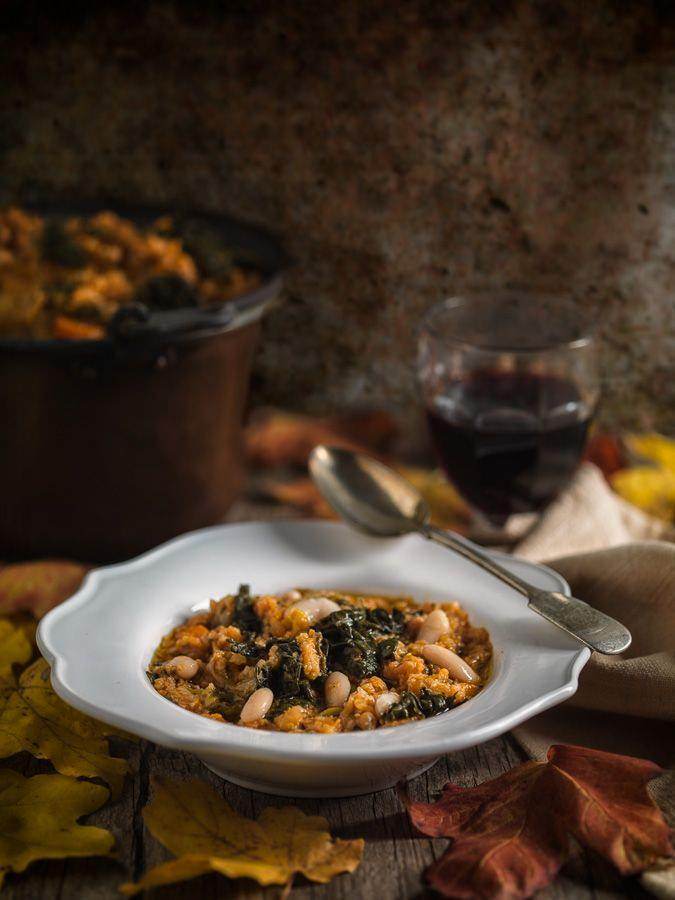
I also think of my husband and my son who are far away in Denver, Colorado in the snow and, with the pleasure of the memories, I think the colors that every day earth offers us in this fall rainy and humid, so I want to cook something of tasty and warm.
The dark green kale, orange carrots, purple turnips, white cabbage, green spinach, orange pumpkin cut, green rosemary.
With the silence of the Tuscan countryside, I start cooking.
The steam cookers rests on the fogged windows of the kitchen, the smells soften the air of the house, and the vegetables freshly picked in the garden behind the house are cooking are cooking in a large earthen pots.
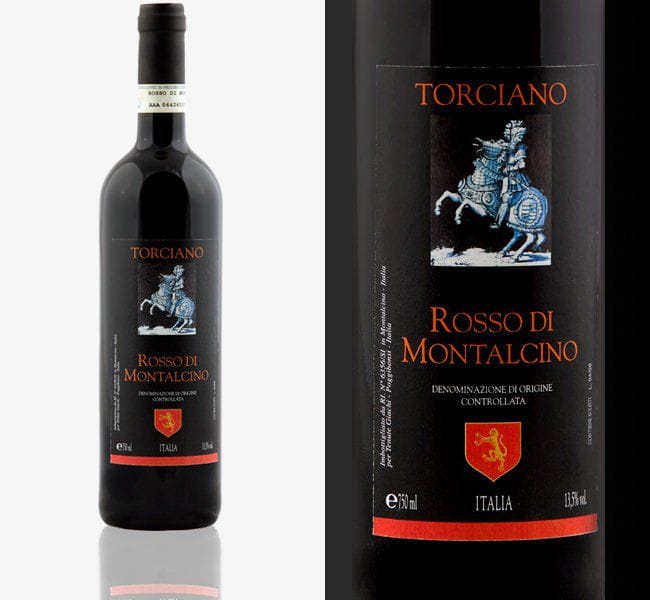
I begin to set the table, add more wood to the fire, and I open a bottle of Rosso di Montalcino satisfied of the dish I’m preparing.
The moment is magical, just poured the soup in colorful dishes, hot, steaming, fragrant product born in this wonderful land of Tuscany.
RECIPE TUSCAN SOUP
It’s nice to cook something warm and tasty on cold winter days.
The Tuscan soup recipe is easy and great to warm the table and make the family happy.
Italian recipe with simple and natural ingredients of the earth.
INGREDIENTS
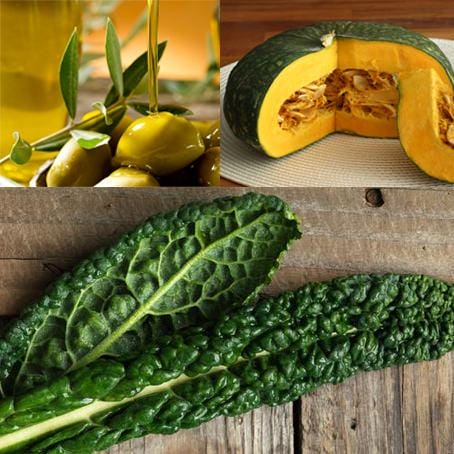
2 bunches of kale
300 g pumpkin
400 g of dried beans
2 sage leaves
1 red onion Tuscan
3 cloves of garlic
100 g of lard
50 g of bacon
1.5 dl of extra virgin olive oil from Tuscany
6 slices of bread unsalted Tuscan
Salt to taste
PROCEDURE
Put the beans to soak in warm water for 12 hours, then cook them for 15 minutes in salted water in a crock pot with sage, onion and garlic.
Clean the pumpkin, remove the seeds and filaments and cut into cubes.
Wash the cabbage, cut into small pieces. Finely chop the bacon and the bacon and fry in a crock-pot with two tablespoons of olive oil, then add the cabbage and beans with their cooking water and the diced pumpkin and cook for about 30 minutes.
Toast the slices of bread in the oven, then place them in individual bowls, pour the soup and season with olive oil remained.
The Tuscan soup is ready.
Author

Luciana Cilemmi
Luciana Cilemmi, deals with Magazine, Style Director and Co-founder of Tenuta Torciano winery and Tenute Giachi wines and the innovative Viviarium Restaurant of Bottega Torciano- Tenuta Torciano & Winery is part of an international reality that is born in Italy by an initiative of Pierluigi Giachi and Luciana Cilemmi, who have worked for years in the Italian wine market , expanding throughout in the United States, managed and controlled by the american company ' Bellavini winery. Luciana Cilemmi was born in San Gimignano to a family of artists specialised in the restoration of medieval buildings. Having completed her technical studies, she now pursues the interests passed on to her by her family, like her passion for artistic objects, in particular works of art created in Tuscany between the Middle Ages and the Renaissance. But she reserves her keenest enthusiasm for the historic works completed in San Gimignano between 1100 and 1300. Alongside her love of medieval history, she is fascinated in wines produced from Tuscan vineyards, which, together with saffron and wool, were the most sought-after goods traded by the wealthy noble families of San Gimignano already in medieval times. Luciana Cilemmi left San Gimignano at the age of 21 and embarked on a pilgrimage in search of knowledge and to discover the new winemaking skills and products that were then developing both in Italy and in France. In the meantime she added to her knowledge of wine by attending specialised courses and becoming a master of wine. On returning to Siena, she discovered a wonderful area near Murlo where she fell in love with the tiny, unspoilt village of Montepescini. She bought the estate of Montepescini where, based on the experience she had acquired over the years, she found a particular lie of the land, special climatic conditions and an altitude suited to the creation of great wines. With enormous enthusiasm, doggedness and considerable effort, a reclamation programme was started to renew the terrain which was then used to plant 30 hectares of specialised vines. Sangiovese is the dominant vine, followed by Cabernet Sauvignon, Merlot and Syrah. Years of experimentation and the introduction of new winemaking techniques eventually led to the creation of Luciana di Memmi’s prestigious wines. Some years ago, Luciana Cilemmi succeeded in realising her dream of a lifetime: to return to her home town, San Gimignano. She was destined to buy the historic palace with the medieval tower, which had been owned by the prestigious Useppi family from 1200 to 1927 and had then passed to the noble and historic Chigi family of Siena. The Useppi were a powerful Sienese family who owned several castles. This beautiful medieval building has an elegant and distinctive façade full of Sienese and Pisan architectural influences. If you find yourself in San Gimignano, make sure you visit the Chigi Tower and Palace. Luciana Cilemmi holds regular events in the rooms of the medieval tower, such as the presentation of wines, both from her vineyards and elsewhere, attended by international journalists, experts from the sector and critics. She also organises exhibitions of works of art and paintings, and press conferences on the subject of "Wine in San Gimignano during medieval times”. Visiting the home of Luciana Cilemmi is like re-living an aspect of the past that will not return except through the imagination of those who have believed and continue to believe in this story.


